Rules and permission
Is it legal yet?
It has been legal in Great Britain since 27 August 2026. The amending regulations were made in the July before that and took effect on the day. Up to then these devices could not lawfully be sold, supplied or used here.
Do the Scottish rules really differ from the rest of Britain?
Yes. Planning is devolved and Scotland has its own householder permitted development classes, set out in Scottish Planning Circular 1/2024. The allowance for how far equipment may stand off a wall is 1 metre on your house and 500 mm on another building in the garden. Those are Scottish figures and we do not quote anyone else’s.
What about a conservation area?
The equipment is allowed on a rear elevation, or on a side elevation that does not front a road. On a front elevation facing the street you are outside the right.
My house is listed.
Then permitted development does not cover it, and neither does anything in the curtilage of a listed building. Talk to your council before you order anything.
Can I put one on a timber balcony?
We cannot promise you that. Scottish guidance does not mention plug-in solar, timber cladding or balconies at all, so there is no line in it that says yes and none that says no. Ask your planning authority, and we will help you put the question.
The device you end up with
How can I tell a kit has been approved?
Every compliant device is type tested and entered on the ENA Type Test Register before it goes on sale, so ask the seller to point you at its entry. A kit that is missing from the register has never been through that.
What are the limits?
800 VA of apparent power into the mains and 3.5 A of current, fed by no more than 2000 W of panels. One inverter takes up to four modules, with a maximum of two wired in series inside a string. Once the panels add up to more than 960 W, the specification wants somebody qualified to say whether the installation suits the house.
Why are the panel watts and the output watts different numbers?
Because they measure different things. The panels can add up to 2000 W of direct current while the inverter is still limited to 800 VA going into your sockets. A listing that quotes only one of the two is telling you half the story.
Can I put a battery on it?
No. Neither a standalone plug-in battery nor a solar device built with storage in it is covered, so a kit sold to you on that footing has not been through the approval these rules describe.
Is an extension lead allowed?
No. Extension cables, multi-way adaptors, RCD adaptors and travel adaptors are all ruled out, and the device has to carry that warning on it.
What it makes, and what it saves
What would I get in a year?
One 800 watt device on a clear south facing roof slope comes to about 661 kWh a year at Glasgow and 628 at Inverness. Tilt the same device at 30 degrees on garden ground and you are at 656 and 623. Stand it upright against a south wall and it is 491 and 470. Turn that wall to face east and it drops to 337 and 321. All eight are modelled ceilings for two points, not a forecast for your own roof.
Is Scotland a bad place for this?
It is the lowest in the UK, and we would rather say so. What that means in practice is that position matters more here. Getting the panel onto a roof pitch or a garden frame instead of an east facing wall is worth about twice as much as moving house to Brighton.
Does generating the electricity mean saving the money?
No, and this is where people get caught. The saving depends on how much of the house is switched on while the panel is working. With storage outside the approved class, whatever you are not using at that moment is gone.
What about shade?
These numbers all assume a clear view of the sky. A rowan, a chimney head, a dormer or the gable next door each take a bite, and a modelled figure has no way of knowing they are there. That part needs eyes on the house.
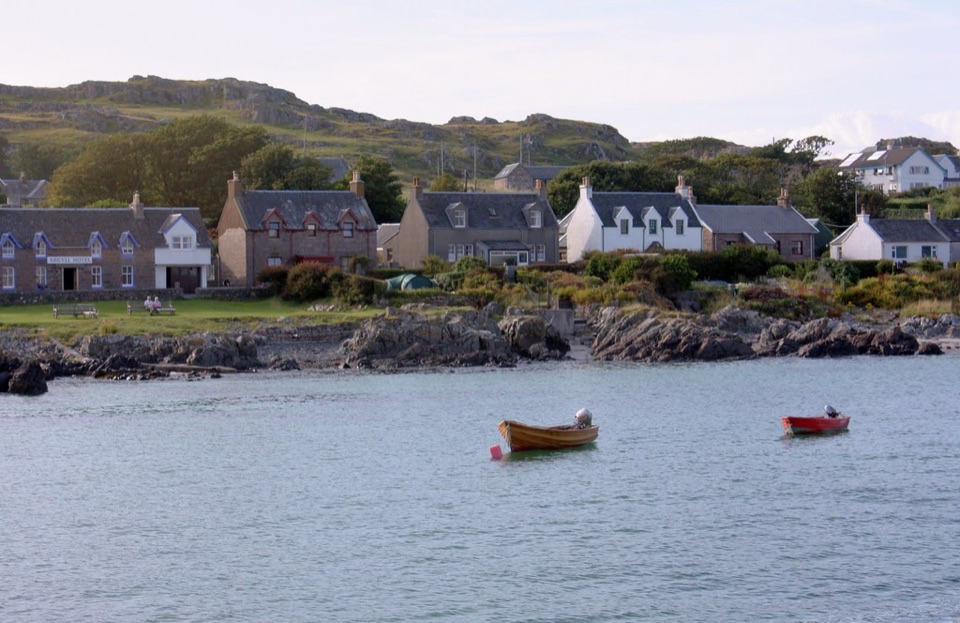
The two sets of numbers are PVGIS output for a 0.8 kWp array losing 14 per cent in the system, run at Glasgow and at Inverness on 13 September 2026. Everything about the device itself comes out of version 2.0 of the interim product specification, dated July 2026.
Cost, renting and insurance
Why are there no prices here?
No figure we could print here would hold. What the kit costs moves about, and what an outdoor socket costs turns on your own wiring. You get a number from us once we know what your wall is and where the socket would have to go.
Do you take commission from manufacturers?
No. You pay us, which is why we are able to tell you when a panel is not worth putting up at your house.
I rent, or I hold a lease.
Get your landlord or your factor to agree in writing before anything is ordered. It is their building and the panel is going on it.
Will my house insurance care?
It might. A compliant device has to arrive with instructions telling you to check, so ring your insurer before the kit turns up.
The house is old and so is the wiring.
Get an electrician to look at the socket and the circuit behind it before anything goes in. A lot of Scottish stone housing has had its electrics added to a few times over, and that is worth knowing about first.
A surface and planning check
Where the panel can go under the Scottish rules.
Read this page
Fitting, and an outdoor socket
The socket and the circuit are electrician work.
Read this page
Your network operator
Which of the two you notify, and how.
Read this pageSend your postcode and we'll check everything
We answer every enquiry by email, and we tell you when a panel is not worth putting up at your house.
- Glasgow
- Edinburgh
- Aberdeen
- Dundee
- Inverness
- Perth
- Stirling
- Fife
- the Borders
- Dumfries and Galloway
- the Highlands
- the islands
Postcode first, then the spot
Your name and email, your postcode, and the roof, wall or garden you mean. You get an email back with the Scottish planning position, a realistic yearly figure, and the operator for your postcode.
Email only. Nobody else gets your details and nobody pays us commission.